Electronics design constraints for substations
Substations are essential to national power networks, stepping voltage up or down throughout the supply chain. They transmit high-voltage electricity over long distances and distribute it at lower voltages for end users. Substations are known among electronics designers and technicians as challenging environments due to high-voltage surges, temperature extremes, moisture ingress, and electromagnetic interference (EMI). Poorly designed hardware or a single oversight can result in equipment failure or even endanger lives.
This complexity makes substation electronics design a specialised field. It demands integration of high-voltage engineering, digital automation, strict safety standards, and real-time reliability to manage power distribution and grid stability. For engineers, the focus is on environmental hardening and system resilience. For decision-makers, it is a strategic investment in grid modernisation, operational efficiency, and safety through advanced technologies.
As utilities move toward digital substations and smarter grid infrastructure, already demonstrated in projects such as the UK’s first smart electricity substation installed in Kent, the role of substation electronics is expanding beyond hardware reliability to system-wide performance and data integrity.
Why are substations complex environments?
Unlike typical industrial or urban environments, substations differ in function, voltage and purpose, often operating unmanned and combining multiple stressors simultaneously:
- High-energy transients from switching and lightning events
- Persistent exposure to strong electromagnetic fields
- Wide and rapid temperature fluctuations
- Long deployment lifecycles (often 20 to 40 years)
Electrical engineering standards such as IEC 61850 and IEC 60255 set performance and interoperability requirements, but meeting these standards imposes constraints, such as electromagnetic compatibility (EMC) compliance and insulation coordination. Compliance alone does not ensure real-world viability, as standardised tests address individual stress factors in controlled settings, while substations expose equipment to multiple, long-term stressors. This gap can lead to failures between laboratory validation and field deployment.
EMI and EMC challenges in substation electronics design
Electromagnetic interference (EMI) is a fundamental consideration in substation electronics design, driven by the high-energy switching operations and electrical activity inherent to these environments.
Switching events and faults can produce fast transients that disrupt signal integrity or damage sensitive components if not managed effectively. Early digital protection systems with inadequate EMC design experienced nuisance tripping during switching, underscoring the need for robust interference mitigation at both device and system levels.
Engineering Perspective: Achieving compliance with standards such as IEC 61000, IEC 61850-3, and IEEE 1613 requires a combination of design strategies beyond basic shielding, such as:
- Galvanic isolation (e.g. optocouplers, magnetic isolation, fibre optics)
- Controlled grounding and PCB layout to minimise noise coupling
- Layered transient protection (TVS diodes, filtering, surge suppression)
Strategic Perspective: In practice, EMI-related issues are more likely to surface during abnormal operating conditions, such as switching events or faults, when reliable data and system visibility are most important. Designing for EMC resilience helps ensure that monitoring and control systems remain functional under these conditions, supporting both operational continuity and fault response.
Thermal management in sealed substation enclosures
Substation equipment is often installed in unconditioned environments with significant temperature variation due to geography and enclosure design. Electronics are frequently housed in sealed enclosures to protect against dust, moisture, and contaminants, which restricts the use of conventional active cooling.
Engineering Considerations: Active cooling systems, such as fans or air conditioning, can introduce failure risks including mechanical wear, higher maintenance, and exposure to contaminants. Therefore, substation thermal management often prioritises passive and closed-loop methods:
- Conduction cooling through aluminium enclosures
- High thermal conductivity interface materials
- Component derating to account for sustained elevated temperatures
In some cases, closed-loop systems like heat exchangers or thermoelectric cooling are used for higher heat loads. These solutions must be balanced with reliability, maintenance, and enclosure integrity requirements.
Real-World Context: In offshore wind substations, salt-laden air accelerates corrosion, making active cooling impractical. Sealed, conduction-cooled enclosures, sometimes nitrogen-purged, dissipate heat while maintaining ingress protection and long-term reliability with minimal maintenance.
Designing substations for transient events and surge protection
Electrical transients (i.e., power surges) are a routine aspect of substation operation, resulting from switching events, fault conditions, and external factors such as lightning strikes. These events can introduce voltage spikes well beyond normal operating ranges, placing stress on both power and signal interfaces.
Engineering Considerations: Effective substation electronics design typically incorporates layered safety protection concepts and strategies to prevent equipment failure:
- Primary protection (e.g. gas discharge tubes, MOVs)
- Secondary protection (e.g. TVS diodes, filtering)
- PCB and system-level design to manage current paths and grounding
System-Level Impact: Individual protection components are important, but overall system resilience relies on effective integration. In interconnected environments, inadequate protection at one interface can impact adjacent systems, especially in communication and control networks.
Balancing substations’ cost, reliability, and lifecycle performance
Cost optimisation is often overlooked in substation design and deployment. Over-engineering increases BOM costs and slows adoption, while under-engineering can raise failure rates by up to 70% and increase lifecycle and maintenance costs by up to 30%.
Engineering Considerations: Reliability is often improved through component derating, which means operating equipment such as transformers, conductors, and switchgear below their maximum rated capacity. This approach enhances reliability against thermal stress and high ambient temperatures, significantly increasing Mean Time Between Failures (MTBF), especially in environments with sustained stress.
Strategic Perspective: For utilities and asset operators, lifecycle performance is often more important than upfront cost. Designing systems for extended maintenance intervals reduces total cost of ownership, especially in remote or hard-to-access substations.
Designing substations for long-term deployment and component obsolescence
Substation infrastructure is designed for operational lifespans of several decades, which often exceeds the lifecycle of electronic components, creating a fundamental mismatch.
Engineering Considerations: Managing long-term deployment requires a combination of design and supply chain strategies:
- Selection of industrial-grade components (e.g., silicon) with long availability windows, such as chips with 10-15 year production cycles
- Modular architectures that support partial system upgrades, such as using communication protocols like LoRaWan for energy monitoring, allow components to be replaced without changing the entire core logic.
- Firmware and software strategies that support long-term maintainability and secure remote updates.
Practical Implications: Legacy systems often need additional interface layers to remain compatible with modern SCADA and communication platforms. Designing for future integration significantly helps to reduce costly retrofits.
From standalone rugged devices to connected substation systems
The transition toward digital substations and substation automation systems is redefining the role of electronics from isolated, rugged devices to interconnected, data-driven infrastructure. Standards such as IEC 61850 enable real-time communication between assets, forming the foundation for applications including condition-based monitoring, predictive maintenance, and distributed grid intelligence.
A practical example of this shift can be seen in projects delivered by GE Vernova in collaboration with UK Power Networks, the ‘world’s first smart substation’, where digital substation technologies have been deployed to improve network visibility and operational efficiency. By integrating advanced grid software with connected substation assets, these systems enable more dynamic control of electricity distribution, supporting increased renewable energy integration and faster fault response.
Emerging Design Considerations: Increased connectivity brings new system-level requirements:
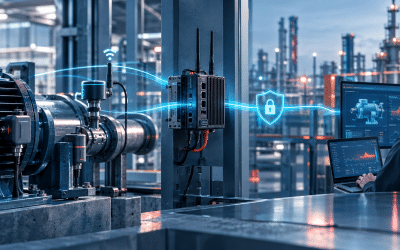
- Greater emphasis on cybersecurity across devices and communication layers
- Dependence on network performance, latency, and reliability
- More complex validation across hardware, firmware, and software systems
System-Level Perspective: As more devices are deployed in substations, overall reliability depends on each node’s performance. A single sensor or communication module failure may not be critical alone, but it can impact data integrity, system visibility, or automated decision-making.
In highly connected environments, resilience depends on both hardware design and the system’s ability to maintain reliable operation despite partial failures or degraded inputs.
Opportunities for innovation in substation electronics design
Despite these constraints, there is growing potential for innovation and differentiation as substations become more intelligent and data-driven.
Key areas of innovation include:
- Edge processing for localised decision-making
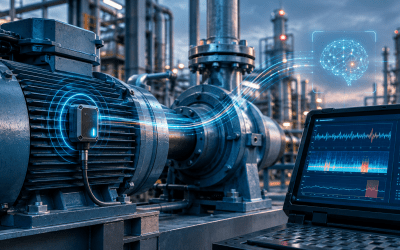
- Condition monitoring for critical assets like transformers
- Modular platforms for easier upgrades
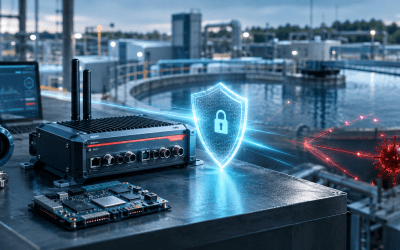
- Cyber-resilient hardware design
Industry leaders such as Siemens Energy and Schneider Electric are advancing in this area, yet significant opportunities remain for specialised, ruggedised subsystems.
Final thoughts on engineering substations for grid resilience
Rugged electronics are essential for substation operation and grid stability. As substations become connected and data-driven, the challenge is to digitise infrastructure without compromising reliability or safety. Next-generation substation electronics design must balance environmental hardening, long-term maintainability, and modern connectivity to support smarter, more resilient grids without introducing new failure points.
At Ignitec, we bridge the gap between complex power and digitisation requirements and field-ready ruggedisation. From PCB layout for high-transient environments to thermal modelling for sealed enclosures, we ensure your substation hardware delivers reliable performance and seamless grid integration. Contact us for a free discovery call with an expert to discuss building for longevity and optimising your system design for performance and ROI.