
We are an award winning product design consultancy, we design connected products and instruments for pioneering technology companies.
What is the real cost of maintenance-free sensors?
Reading time 11 mins
Key Points
- Maintenance-free sensors offer the promise of long-term, low-intervention operation, but achieving their true value requires careful lifecycle planning and realistic expectations about their limitations.
- While their upfront cost is higher, maintenance-free sensors dramatically reduce long-term operating and maintenance expenses in hard-to-access or hazardous environments.
- Deployment costs are similar across sensor types, but traditional sensors incur recurring labour, calibration, and travel expenses that quickly add up.
- Energy-harvesting designs minimise common failure modes, such as battery degradation, thereby reducing downtime and improving reliability.
- Continuous, uninterrupted data collection provides greater long-term value than the hardware itself, especially for predictive maintenance and environmental monitoring.
- Hidden costs—such as integration, firmware updates, environmental limits, and network or regulatory changes—must be considered in ROI calculations.
- Maintenance-free sensors deliver the strongest returns when access is difficult, downtime is costly, or safety/environmental monitoring, as well as data collection, are critical.
- They are not ideal for high-frequency, power-intensive, or temporary deployments where simpler sensors may be more practical.
Need help designing long-life, low-maintenance and energy-efficient sensors that avoid unexpected failures? Let’s discuss your technical requirements.

Ben Mazur
Managing Director
I hope you enjoy reading this post.
If you would like us to develop your next product for you, click here
Motion sensors, temperature sensors, biometric sensors on safety devices and countless others have become so integrated into daily life that we assume they’ll alert us when something isn’t working as it should, and maintenance can be scheduled right away. However, in places where sending repair technicians is costly, hazardous, or impossible (such as offshore energy platforms, underground water networks, or remote agricultural land), maintenance-free sensors offer the promise of long-term operation, uninterrupted data collection, and lower total cost of ownership.
But while the marketing message sounds simple — “install once, forget forever” — the reality is more nuanced. Solar-powered devices with high-capacity batteries that operate 24/7 still require periodic inspections, especially when environmental conditions limit energy harvesting or accelerate component wear. IoT customised for hazardous environments and predictive maintenance is still subject to regulation changes, certification updates, and real-world variability that affects lifespan.
For product developers or business leaders looking to design or deploy more operationally efficient sensor-enabled devices, the real question isn’t how to build better or reduce downtime. It’s about understanding the real costs of investment and collaborating with experts to ensure you get it right.
What are maintenance-free sensors?
Maintenance-free sensors are devices designed to operate for years with little to no human intervention. Instead of relying on mechanical components or consumables that degrade quickly, they typically use solid-state electronics, non-contact measurement methods, and low-power design principles. Many are self-powered, using technologies such as indoor solar cells, vibration harvesting, or thermal gradients, to eliminate the need for battery replacements altogether.
Examples include self-powered temperature sensors, long-life vibration sensors used in condition monitoring, and passive environmental sensors for air quality or water quality.
In practice, “maintenance-free” often refers to features such as built-in self-calibration, minimal drift over time, non-contact operation that avoids wear and tear, and the ability to run continuously for anywhere from five to twenty years. These capabilities are typically achieved through energy-harvesting hardware, ultra-low-power microcontrollers, and communication protocols designed for longevity, including LoRaWAN, NB-IoT, or BLE. Ruggedised or fully sealed housings, often with high IP ratings, help protect these sensors in harsh, remote, or hazardous environments.
However, maintenance-free does not mean fail-proof or everlasting. These devices still require lifecycle management, firmware considerations, and periodic checks—especially in environments where energy availability fluctuates, or conditions exceed design limits. Understanding these limitations is essential because they ultimately shape the sensor’s total cost of ownership (TCO) and determine whether a maintenance-free model is genuinely the right fit for the application.
Why does maintenance-free IoT cost more?
When evaluating maintenance-free sensors, many organisations focus solely on the retail price or development cost. This can make them appear more expensive than traditional battery-powered sensors at first glance. But the real cost picture is much broader — and this is where the comparison shifts.
In reality, sensor cost is distributed across several layers: hardware, deployment, ongoing maintenance, and the cost of any downtime or poor data quality. Maintenance-free sensors typically cost more upfront but significantly reduce costs over time. Traditional sensors, on the other hand, are less expensive to purchase but incur additional expenses over their lifetime.
Higher upfront hardware costs
Maintenance-free sensors typically use more durable parts, better housings, and advanced energy-harvesting modules. As a result, their initial price point is typically higher than that of a battery-powered equivalent. However, this initial difference is only one part of the total cost picture.
Sensor deployment cost
Deployment costs are often similar whether you install a lower-cost traditional sensor or a more expensive, maintenance-free one. The difference lies in how often you need to access the device later (maintenance is often the highest recurring cost) and how durable it needs to be.
On offshore platforms, underground utilities, tall structures, hazardous zones, or even space exploration, simply getting to the sensor can require specialised equipment, permits, or trained personnel. A cheap sensor that requires battery changes or recalibration every year quickly becomes more expensive than one that won’t need attention for the next 10 years or more.
Sensor’s operating costs
This is the most overlooked category — and where maintenance-free sensors offer the biggest savings. Traditional sensors often require:
- Calibration trips
- Battery replacements
- Labour hours
- Periodic physical inspections
- Shut-downs or downtime to access them
- Travel to remote or restricted areas
- Health & safety compliance procedures
In some industries, these operating costs could dwarf the cost of the sensor itself. For example, a routine inspection in the energy sector can range from £20 to £200 for basic cleaning, to thousands of pounds depending on the type of sensor, location, safety requirements, and the level of service required. Multiply that by annual maintenance for hundreds—or thousands—of sensors, and the total quickly becomes significant.
Maintenance-free sensors minimise or eliminate these recurring costs.
Risk of sensor failure and downtime
A failed sensor, maintenance-free or otherwise, can disrupt an entire operation, resulting in:
- Loss of visibility into safety-critical conditions
- Missed early warning signals
- Unplanned downtime
- Environmental or compliance incidents
- Poor product quality
However, traditional battery-powered sensors fail significantly in real-world conditions. Batteries degrade in hot, humid, or cold climates, drain faster than predicted when transmission power increases, and suffer from accelerated wear under stress.
Maintenance-free sensors are designed to reduce (not eliminate) these failure modes, stabilising long-term operations and reducing risk-related costs.
Continuous data value
In long-term environmental monitoring projects, continuous data is often more valuable than the hardware itself. Maintenance-free sensors reduce data gaps caused by battery failures, restart cycles, accuracy drift, and calibration inconsistencies. This leads to better analytics, more reliable predictive maintenance models, and fewer blind spots.
Hidden costs (and savings) to consider
Environmental impact
Maintenance-free sensors reduce battery waste, replacement cycles, additional packaging and shipping costs, and the overall carbon footprint associated with technician travel. For ESG-driven organisations, this can be a major deciding factor.
Integration costs
Costs may arise from:
- Gateways and communication infrastructure
- Middleware and data platforms
- Firmware adaptation
- Security hardening
- Custom enclosure adaptation
Choosing the wrong sensor for the wrong environment can multiply integration costs.
Longevity mismatches
Some sensors are rated for 10+ years, but:
- Networks may change.
- Firmware may need updating.
- Environmental exposure may exceed design limits.
- Regulations may shift.
Longevity is only valuable if the ecosystem (environmental, technical, or regulatory) lasts as long as the sensor does.
When are maintenance-free sensors a solid ROI?
They’re ideal when:
- Site access is difficult or costly.
- Sensors must last between 5 and 20 years.
- The environment is hazardous (ATEX, offshore, mining).
- Maintenance windows are limited.
- Downtime is expensive.
- The data being measured is safety or mission-critical.
- A project aims to minimise the environmental footprint.
Industries where these sensors deliver strong ROI:
- Oil & gas
- Utilities
- Smart water networks
- Industrial automation
- Renewable energy
- Smart agriculture
- Rail and transport infrastructure
- Environmental monitoring
In these cases, the savings from avoided maintenance far outweigh higher purchase costs.
Sometimes, simple sensors are a better choice
Maintenance-free sensors are not always suitable when:
- The environment lacks stable energy for harvesting
- You need very high-frequency sampling (which drains power)
- The deployment is temporary
- Sensors require regular recalibration for accuracy
- Data loads are high (video, real-time analytics)
- You’re working with low budgets
A maintenance-free design is strongest in low-power, long-life, and low-maintenance applications—not in heavy-duty, real-time systems.
Need help choosing the right sensor architecture for your project?
Before committing to a maintenance-free design, it’s essential to consider the full lifecycle costs, including hardware, deployment, servicing, downtime risk, and long-term data value. In many cases, a higher-priced sensor can become the more cost-effective option over five, ten, or even twenty years of operation.
Maintenance-free sensors aren’t just a hardware upgrade; they’re a strategic choice. When designed well, they can reduce operational overhead, improve reliability, and minimise site visits—especially in remote, hazardous, or mission-critical environments.
If you’re exploring whether this approach is right for your device or project, our team can help you evaluate the trade-offs and map out the path from concept through design, prototyping, testing, and deployment.
Book a free discovery call to discuss your requirements with one of our experts.
Optimise your product’s success: Design for X
Space-grade IoT: Bringing next-gen connectivity down to earth
IoT for hazardous environments: Expert tips for safe product design
FAQ’s
What are maintenance-free sensors?
Maintenance-free sensors are devices designed to operate for extended periods without requiring manual servicing, such as battery changes or recalibration. They typically utilise solid-state components, energy-harvesting systems, or long-life power storage solutions. Their purpose is to reduce operational costs and minimise the need for field maintenance.
Why are maintenance-free sensors used in remote or hazardous environments?
They are used because sending technicians into remote, offshore, or dangerous locations is costly, risky, and often impractical. A sensor that can operate independently for years reduces the frequency of site visits and the associated safety concerns. As a result, they help maintain continuous monitoring without interrupting operations.
How do maintenance-free sensors reduce the total cost of ownership?
They reduce the total cost of ownership by cutting down on recurring expenses such as battery replacements, calibration trips, and specialist access requirements. Reliable long-term performance also reduces downtime and data gaps. Over a device’s lifecycle, these savings often outweigh the higher upfront hardware cost.
What makes a sensor truly maintenance-free?
A truly maintenance-free sensor combines features like energy harvesting, long-life components, sealed housings, and self-calibration algorithms. This design allows it to operate for years with minimal human intervention. The goal is long-term reliability rather than literal zero maintenance.
Which industries benefit most from maintenance-free sensors?
Industries such as energy, mining, infrastructure monitoring, agriculture, and offshore operations benefit the most. These sectors often involve remote assets that require time-consuming or hazardous maintenance. Long-life sensors improve visibility and reduce the need for physical site access.
Why do battery-powered sensors fail more often?
Battery-powered sensors are vulnerable to extreme temperatures, vibration, humidity, and high-frequency sampling demands. These conditions accelerate battery degradation and shorten real-world lifespan. This leads to more frequent failures and increased operational costs.
How long do maintenance-free sensors typically last?
Many maintenance-free sensors are designed to operate for 5 to 20 years, depending on their specific technology and environmental conditions. Their longevity depends on factors such as sampling rate, communication frequency, and environmental stress. Although they last longer than traditional sensors, they are not immune to eventual ageing.
What factors affect the lifespan of maintenance-free sensors?
Temperature extremes, mechanical vibration, humidity, and continuous high-power workloads all affect lifespan. Energy-harvesting efficiency and housing durability also play key roles. Deployments in harsh or high-duty environments may reduce the lifespan of the device, even if it is designed for long-term operation.
Why aren’t all sensors maintenance-free?
Not all sensors can be maintenance-free because certain applications require high power, rapid sampling, or active sensing elements that consume more energy. In these cases, batteries or wired power remain necessary. Some environments also require frequent calibration for regulatory or safety reasons.
How do maintenance-free sensors stay powered?
They often rely on energy-harvesting technologies such as solar, thermal, vibration, or RF energy. These power sources feed low-power electronics and long-life capacitors. This allows the sensor to operate with minimal external intervention.
What are the disadvantages of maintenance-free sensors?
Disadvantages include higher upfront hardware cost and performance limitations in environments with very low energy available for harvesting. They may also have constraints on sampling frequency or data transmission to preserve power. Additionally, “maintenance-free” does not mean fail-proof, so some level of lifecycle planning is still required.
Which communication protocols work best with maintenance-free sensors?
Low-power protocols such as LoRaWAN, NB-IoT, and BLE are often used because they extend the battery life or harvested energy. They enable long-range data transmission with minimal power consumption. These protocols support continuous monitoring without frequent manual servicing.
How do maintenance-free sensors improve data quality?
They minimise data gaps by reducing downtime associated with battery changes or physical servicing. Stable operation results in more consistent calibration baselines and fewer drift-related inaccuracies. Over time, this produces a cleaner dataset for long-term analysis or predictive maintenance.
What is the difference between battery-powered and maintenance-free sensors?
Battery-powered sensors rely on replaceable or rechargeable cells that degrade over time, necessitating regular replacement or recharging. Maintenance-free sensors utilise long-life components and energy-harvesting systems to minimise servicing requirements. As a result, maintenance-free designs are better suited to environments where access is difficult or expensive.
When should a business opt for maintenance-free sensors over traditional ones?
A business should consider them when assets are remote, maintenance access is restricted, or downtime is costly. They are also ideal for long-term condition monitoring, where data continuity is crucial. In routine environments where maintenance is easy and low-cost, traditional sensors may still be sufficient.
Why do maintenance-free sensors cost more upfront?
They cost more because they use advanced materials, ruggedised housings, energy-harvesting modules, and long-life storage components. These parts extend lifespan and reduce servicing requirements. Although initial prices are higher, lifecycle savings often make the investment worthwhile.
How do environmental conditions affect maintenance-free sensors?
Extreme heat, cold, humidity, or shock can reduce energy-harvesting efficiency and accelerate component wear. Even sealed, IP-rated housings can be challenged by aggressive environments. This is why “maintenance-free” still requires sensible deployment planning.
What happens if a maintenance-free sensor fails?
A failure can cause data loss, downtime, missed early warnings, or safety risks, depending on the application. The impact is often greater in critical infrastructure because these sensors are relied on for continuous monitoring. This is why failure modes and lifecycle planning remain important even for long-life devices.
Which applications are best suited to maintenance-free sensors?
They are ideal for structural health monitoring, environmental sensing, agriculture, remote pipeline monitoring, and hazardous industrial environments. These applications benefit from long-term, unattended operation. The sensors provide stable, low-maintenance visibility into critical conditions.
Who should evaluate whether a maintenance-free sensor is appropriate for a project?
Product teams, engineers, and operations leads typically evaluate suitability because the decision involves technical, operational, and cost trade-offs. They need to consider factors such as energy budget, installation environment, maintenance access, and lifecycle cost. Choosing the right design early reduces long-term risks and improves deployment success.
Get a quote now
Ready to discuss your challenge and find out how we can help? Our rapid, all-in-one solution is here to help with all of your electronic design, software and mechanical design challenges. Get in touch with us now for a free quotation.
Comments
Get the print version
Download a PDF version of our article for easier offline reading and sharing with coworkers.

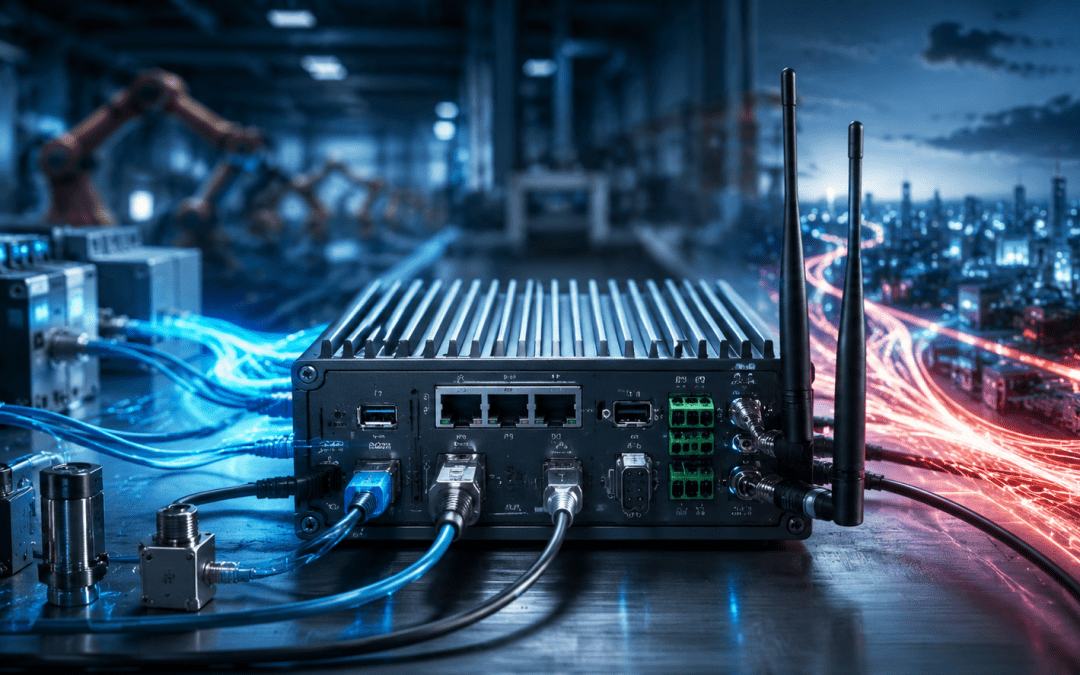
Industrial IoT Gateway Design: Where Protocol and Connectivity Converge
Industrial IoT gateway design decisions that determine reliability, security, interoperability, and scale.
0 Comments