
We are an award winning product design consultancy, we design connected products and instruments for pioneering technology companies.
Controlled environment agriculture: Space’s engineering legacy
Reading time 9 mins
Key Points
- Space agriculture provides the blueprint for Controlled Environment Agriculture (CEA) systems that are reliable, highly efficient, and scalable.
- Most terrestrial CEA systems currently in use are energy and resource hungry, requiring a pivot in design and optimisation.
- The primary lesson from space is the necessity of closed-loop system design to achieve near-perfect water and nutrient reclamation, minimising waste.
- Space constraints require custom hardware and PCB design for LED arrays to achieve energy-neutral lighting and manage the single biggest operational cost.
- Reliance on Commercial Off-The-Shelf (COTS) components introduces risks regarding supply chain vulnerability and system unreliability at scale.
- Extreme engineering demands systems with redundant, self-calibrating sensor networks for real-time diagnostics and automated problem correction.
- Edge Computing developed for remote space habitats allows vertical farms to process data instantly and autonomously, preventing catastrophic crop loss.
- The transition from Proof of Concept (PoC) to a commercial system requires adopting a high-maturity, space-grade engineering methodology.
- Partnering with an integrated design firm ensures that the CEA system architecture is purpose-built for resilience and long-term sustainability.
Why settle for commercial off-the-shelf compromises? We engineer Controlled Environment Agriculture systems that are resilient, energy neutral, and highly efficient.

Ben Mazur
Managing Director
I hope you enjoy reading this post.
If you would like us to develop your next product for you, click here
Rapid population growth and urban development coupled with resource scarcity – particularly food security – is a major global challenge. It puts significant strain on infrastructure, overwhelms services (e.g. water, sanitation, housing), fuels social issues, and increases pollution – especially as climate migration pushes more people into cities seeking stability and opportunities. This in turn becomes a driving imperative for innovative solutions that – among others – maximise food production in restricted spaces, recycle water, reduce waste, and produce resilient crops.
As we have seen in previous posts from prototyping robotics to next-gen connectivity, many of the solutions we seek have already been tried and tested in space – and Controlled Environment Agriculture (CEA) isn’t any different. Indeed, space is arguably the most high-stakes environment ever known, necessitating the development of extreme engineering technologies and offering a direct legacy for innovation here on Earth.
CEA encompasses a range of farming methods and technologies that allow crops to be cultivated outside their natural or preferred environments. In this way, crops are less vulnerable to adverse environmental conditions, resource efficient, produce a higher yield per unit area, and can be produced year round.
In this post, we’ll take a detailed look at the foundational lessons learned from decades of space agriculture that will elevate any Earth-based CEA project from one that’s merely profitable, to one that’s future-safe, scalable, and security-focused as opposed to scarcity averse.
Lesson 1: Closed-Loop System Design (The Resource Reclamation Mandate)
The central challenge of agriculture in space is the absolute scarcity of resources. When resupply is measured in years and billions of pounds, every unit of input—water, nutrients, air—must be captured and reused with near-perfect efficiency. This resource constraint dictates the engineering methodology.
Space Controlled Environment Agriculture (SpaCEA)
Most terrestrial CEA systems currently in use are energy and resource hungry, requiring a pivot in design and optimization. The unique nature of space controlled environment agriculture (SpaCEA), which needs to be both highly resource efficient and circular in design, presents an opportunity to develop intrinsically circular CEA systems:
- Near-Perfect Reclamation: Hydroponic and aeroponic systems developed for space (like the US, European, or Chinese space station crop systems) are engineered to achieve 90%+ water reclamation. This sets the ultimate benchmark for Controlled Environment Agriculture on Earth, requiring highly advanced filtration, vapour capture, and purification technology that minimises system waste.
- Precision Nutrient Delivery: Space systems operate under a tight mass budget, meaning nutrient solutions are monitored and replenished with extraordinary precision. This high-fidelity approach prevents nutrient runoff and waste, securing a vast operational advantage for commercial vertical farms by lowering consumable costs and eliminating environmental output concerns.
By adopting the philosophy of total resource containment driven by space constraints, Earth-based CEA operations secure long-term system stability and predictable input management.
Lesson 2: Robust Sensor Integration and Automation (The Self-Diagnosing System)
In a spacecraft, component access is limited and delayed. Reliability, therefore, must be guaranteed through internal system diagnostics, redundancy, and automation. This necessity has driven the development of the most integrated sensor networks possible.
Miniaturised, Resilient Monitoring
- Integrated Diagnostics: Space agriculture uses highly miniaturised, durable sensor networks that monitor everything from root zone and dissolved oxygen to atmospheric gas concentrations (e.g., ethylene detection for plant stress). Critically, these systems feature redundancy and self-calibration to ensure data integrity without continuous human oversight.
- Edge Computing and Real-Time Control: Communications delays between the International Space Station (ISS) and ground control necessitated the development of Edge Computing—processing complex data (like spectral analysis of leaf health) directly at the source. This is the foundation for autonomous Controlled Environment Agriculture Engineering on Earth, allowing farm automation systems to diagnose and autonomously correct environmental deviations in milliseconds, preventing critical crop failure.
Partnering with an engineering firm skilled in extreme-environment Internet of Things (IoT) ensures that your farm’s sensor suite is not just a collection of components, but a unified, self-managing diagnostic system built for reliable operation. Book a free discovery call with one of our engineers to discuss your agritech needs in more detail.
Lesson 3: Energy-Neutral Hardware Design (The Power Mandate)
Power is the most expensive and limited resource in any space habitat. This constraint has fuelled profound innovation in developing hardware that achieves maximum biological output from minimal electrical input.
Custom PCB and Light Spectrum Design
- Optimising the Watt: Relying on generic Commercial Off-The-Shelf (COTS) components and lighting is a massive energy drain. Space engineering led to the highly specific customisation of LED spectrums—using only the wavelengths proven necessary for biomass production.
- The Bespoke PCB Advantage: To deliver this highly tuned light efficiently, the hardware must be equally custom. This involves bespoke Printed Circuit Board (PCB) design for the LED arrays, optimising electrical pathways and thermal management to prevent energy loss and prolong component life. This custom approach ensures that a vertical farm’s power consumption is managed with space-grade precision, directly addressing the single biggest operational expense.
This level of hardware optimisation—engineering the PCB, power supply, and thermal dissipation—is a necessary inheritance from the power-constrained environment of orbit.
Controlled Environment Agriculture Engineering: Ignitec’s Offering
The principles of space agriculture teach us that the most reliable, efficient system is a unified, purpose-built system. The fragmentation inherent in integrating disparate COTS components and relying on simple Proof of Concept (PoC) solutions introduces critical system vulnerabilities at commercial scale.
At Ignitec, our experience in integrated system design for hazardous environments, complex Health Tech, and environmental monitoring is directly transferable to advanced CEA. We provide the expertise to bridge the gap from concept to high-maturity deployment:
- System Maturity: We treat your vertical farm as the critical, closed-loop environment it is, designing the architecture for fail-safe redundancy and resource efficiency.
- Custom Hardware: We move beyond the limitations of COTS, designing and manufacturing the bespoke PCBs, integrated sensors, and power management systems required to deliver the spectral precision and energy economy of a space-grade solution.
Final Thoughts
The frontier of Controlled Environment Agriculture demands a commitment to engineering excellence and system maturity. If you are seeking to elevate your AgTech platform above the competition with systems proven under the ultimate environmental constraints, the blueprint lies in space’s engineering legacy.
Schedule a free and confidential consultation with us and let’s work together to bring space-grade innovation down to earth.
Low-volume PCB manufacturing vs. COTS: Which is less risky at scale?
Space-grade IoT: Bringing next-gen connectivity down to earth
How can agricultural robotics solutions become more accessible to farmers
FAQ’s
What is Controlled Environment Agriculture (CEA)?
CEA is an advanced method of food production where the growth environment is precisely regulated to optimize plant development and yield. This control encompasses factors like temperature, humidity, light, water, and atmospheric composition. It stands in contrast to traditional farming as it allows for year-round, local production independent of external climate conditions.
Why is Controlled Environment Agriculture considered future-safe?
Controlled Environment Agriculture systems are considered future-safe because they provide resilience against climate volatility and supply chain disruptions. By operating in a closed environment, they prevent contamination, eliminate weather-related crop losses, and ensure reliable food security. This highly controlled nature allows for predictable output regardless of external global crises.
How does space agriculture inform CEA on Earth?
Space agriculture informs CEA by providing blueprints for systems operating under ultimate resource constraints, demanding near-perfect efficiency and reliability. The engineering developed for zero-gravity environments mandates extreme precision in water recycling, power use, and nutrient delivery. These lessons translate directly into de-risking and optimising Earth-based vertical farming operations.
What are the main types of CEA growing systems?
The main types of CEA growing systems are hydroponics, aeroponics, and aquaponics. Hydroponics involves growing plants in a nutrient solution without soil, while aeroponics suspends plant roots in the air and mists them with nutrients. Aquaponics combines aquaculture (raising fish) with hydroponics, using fish waste to fertilize the plants.
Why is energy consumption the biggest challenge for vertical farms?
Energy consumption is the biggest challenge for vertical farms because lighting and climate control systems require substantial continuous electrical input. Traditional lighting fixtures and inefficient HVAC systems drive up operational expenditure, often jeopardizing the profitability of the enterprise. This emphasizes the necessity for custom, energy-neutral hardware design.
How does Controlled Environment Agriculture reduce water usage?
Controlled Environment Agriculture drastically reduces water usage by implementing closed-loop system design, a methodology refined by space agriculture. Systems are engineered to capture, filter, and reuse water and nutrient vapours within the grow environment. This approach can achieve 90%+ water reclamation efficiency compared to open-field farming.
Which sensor technologies are vital for Controlled Environment Agriculture Engineering?
Sensor technologies vital for Controlled Environment Agriculture Engineering include pH sensors and electrical conductivity probes for nutrient solution, environmental sensors for humidity and temperature, and specialised spectral sensors. These devices allow for constant, real-time monitoring of all parameters critical to plant health and system function.
What is the role of Edge Computing in advanced CEA?
The role of Edge Computing in advanced CEA is to enable instantaneous data processing and autonomous system response directly at the farm site. This capability, derived from space environments, avoids latency issues associated with cloud communication and ensures immediate automated correction of environmental deviations. This real-time control is crucial for preventing crop losses.
Why is the choice between custom and COTS hardware critical in CEA?
The choice between custom and Commercial Off-The-Shelf (COTS) hardware is critical because custom systems can be engineered for optimal energy efficiency and precise regulatory compliance. COTS solutions often include unnecessary features and power consumption, leading to higher long-term operational costs and difficulty achieving specific certifications. Custom PCB design, for example, is key to energy-neutral lighting.
How does custom LED spectrum design improve CEA efficiency?
Custom LED spectrum design improves CEA efficiency by using only the specific wavelengths of light necessary for optimal photosynthesis and plant morphology. This targeted approach minimises electrical waste compared to broadband lighting and allows for precise control over plant characteristics. This technique directly addresses the high power consumption challenge in vertical farming.
What are the benefits of low-volume PCB manufacturing for scaling CEA?
The benefits of low-volume PCB manufacturing include allowing for perfect quality control and system iteration before mass production. It secures the supply chain by avoiding reliance on COTS vendors and ensures that the final hardware is precisely aligned with DFM (Design For Manufacture) principles. This stage is a mandatory bridge for achieving reliable, certified scale.
When must a CEA system incorporate design redundancy?
A CEA system must incorporate design redundancy when any component failure could lead to significant crop loss or system downtime, which is often the case in high-value vertical farms. This principle, borrowed from spacecraft mission-critical systems, applies particularly to primary sensors, power management, and fluid delivery systems. Redundancy mitigates operational risk.
Which international standards apply to specialized CEA hardware?
International standards that may apply to specialized CEA hardware include various ISO standards for quality management systems and potentially specific electrical safety or food safety certifications. The required standards will depend heavily on whether the system is installed indoors or outdoors and its proximity to human operators. Compliance must be built into the hardware design from day one.
How does CEA address global food security challenges?
CEA addresses global food security challenges by making high-yield, nutritious food production possible in areas that lack arable land or face environmental extremes. It allows cities to produce food locally, shortening the supply chain and making communities less susceptible to global agricultural disruptions. This method shifts the focus from scarcity aversion to local security.
Why are closed-loop systems essential for sustainable CEA?
Closed-loop systems are essential for sustainable CEA because they ensure minimal input consumption and near-zero environmental waste. By recycling water and nutrients, they dramatically reduce the operation’s footprint on natural resources. This engineered efficiency is what makes Controlled Environment Agriculture a responsible alternative to traditional farming.
What is the difference between hydroponics and aeroponics in CEA?
The difference is the medium used to deliver nutrients: hydroponics uses an inert medium like rockwool or coco coir and constantly cycles water and nutrients over the roots. Aeroponics suspends plant roots in the air within a closed chamber and delivers nutrients via a fine mist at programmed intervals. Aeroponics generally uses less water than hydroponics.
How is Intellectual Property (IP) protected in custom CEA hardware?
Intellectual Property in custom CEA hardware is protected because the unique electronic design, including the custom PCB layout and proprietary firmware, is owned by the developer. Unlike COTS modules which are publicly available, custom hardware requires significant reverse-engineering to replicate. This secures the unique competitive advantage of the system.
Who benefits most from the engineering legacy of space agriculture?
Companies focused on building high-maturity, high-investment vertical farms benefit most from the engineering legacy of space agriculture. These companies require the guaranteed efficiency, precise environmental control, and system resilience that are inherent in space-grade design principles. It provides a blueprint for achieving operational perfection.
When does a vertical farm need to move beyond COTS hardware?
A vertical farm needs to move beyond COTS hardware when it is focused on achieving operational profitability at scale, regulatory compliance, or maximum system resilience. COTS solutions introduce too much variability and risk into the supply chain and energy consumption models. The transition should occur before the final, large-scale production run.
What is meant by the "constrained environment" of space agriculture?
The “constrained environment” of space agriculture means that the system is strictly limited by factors like mass, volume, power, and the impossibility of resupply or external repair. This forces engineers to create hyper-efficient, highly reliable systems that eliminate all unnecessary components and waste, a direct lesson for Controlled Environment Agriculture Engineering.
Get a quote now
Ready to discuss your challenge and find out how we can help? Our rapid, all-in-one solution is here to help with all of your electronic design, software and mechanical design challenges. Get in touch with us now for a free quotation.
Comments
Get the print version
Download a PDF version of our article for easier offline reading and sharing with coworkers.

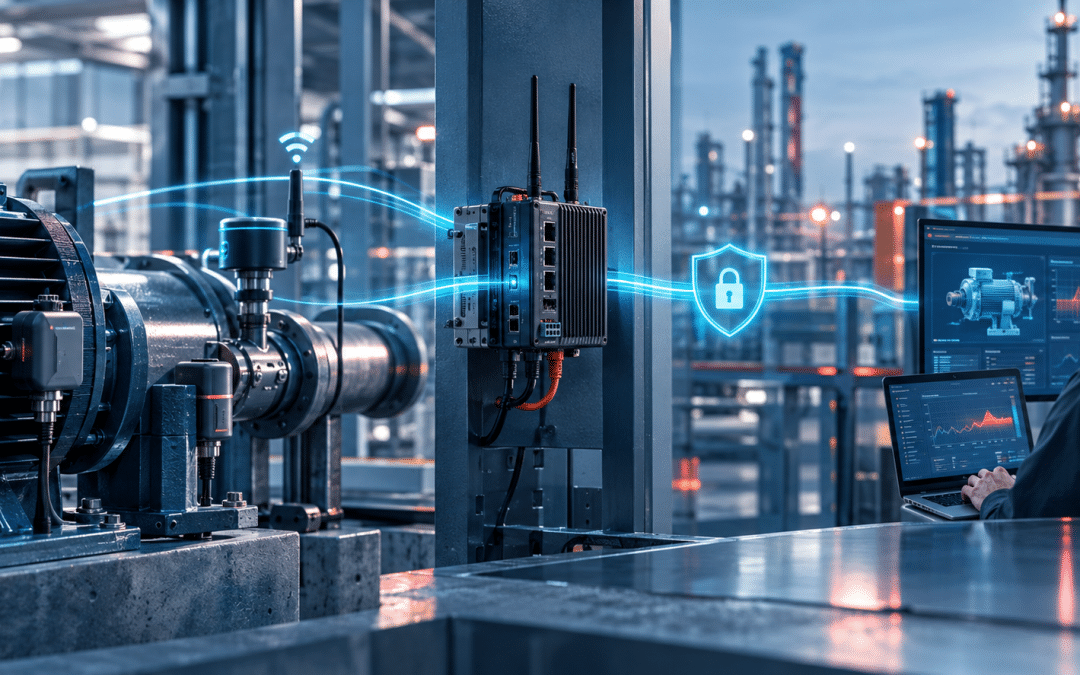
Building a resilient industrial IoT architecture: From sensor to insight
Resilient industrial IoT architecture designed to avoid the integration risks at the boundaries between protocol, gateway, security and analytics layers.
0 Comments